AYANEO · AYANEO 3
AYANEO 3
Mainstream / enthusiast modular handheld · Active — shipping since Apr 2025; available throughout 2026
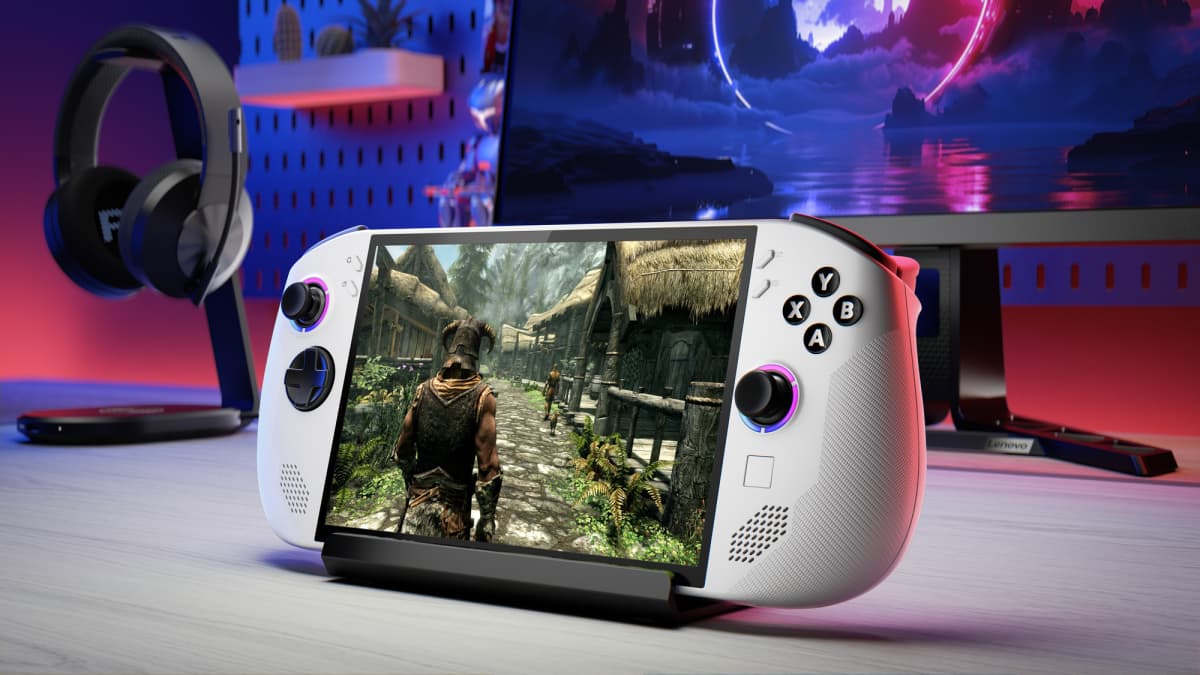
AYANEO's modular flagship pairs a swappable-faceplate chassis with either the value 8840U or the much faster HX 370, each offered with OLED or IPS LCD. A 49 Wh battery, RGB Hall sticks, dual-stage Hall triggers and — rare in this class — a dedicated OCuLink eGPU port round out a genuinely configurable Windows handheld. It shipped in April 2025 and remains AYANEO's mainstream pick through 2026.
Pros
- OLED SKUs get a bright, 144 Hz, 110% DCI-P3 panel
- Dedicated OCuLink port for eGPU, alongside dual USB4
- RGB Hall sticks and dual-stage Hall triggers throughout the range
Cons
- Only 49 Wh battery for an up-to-35 W HX 370 config
- LCD SKUs give up OLED contrast and refresh headroom
- Modular design adds cost versus fixed-chassis rivals
Also in
Configurations
Ryzen 7 8840U · OLED · 16 GB · 512 GB
Ryzen 7 8840U · RDNA 3 (12 CUs — Radeon 780M) · 8c / 16t · 15–35 W TDP · 16 GB · 512 GB PCIe 4.0 NVMe (M.2 2230)
$699 Early Bird (8840U OLED base); street ~$699–$899 $699 (as of 29 Jun 2026)
Check price →Ryzen 7 8840U · IPS LCD · 16 GB · 512 GB
Ryzen 7 8840U · RDNA 3 (12 CUs — Radeon 780M) · 8c / 16t · 15–35 W TDP · 16 GB · 512 GB PCIe 4.0 NVMe (M.2 2230)
120 Hz IPS LCD panel with VRR instead of OLED — same chassis and APU as the OLED SKU
$699 Early Bird (8840U LCD base) $699 (as of 29 Jun 2026)
Check price →Ryzen AI 9 HX 370 · OLED · 16 GB · 512 GB
Ryzen AI 9 HX 370 · RDNA 3.5 (16 CUs — Radeon 890M) · 12c / 24t · 15–35 W TDP · 16 GB · 512 GB PCIe 4.0 NVMe (M.2 2230)
$799–$899 estimated (HX 370 uplift over 8840U) $799 (as of 29 Jun 2026)
Check price →Ryzen AI 9 HX 370 · IPS LCD · 16 GB · 512 GB
Ryzen AI 9 HX 370 · RDNA 3.5 (16 CUs — Radeon 890M) · 12c / 24t · 15–35 W TDP · 16 GB · 512 GB PCIe 4.0 NVMe (M.2 2230)
120 Hz IPS LCD panel with VRR instead of OLED — same chassis and APU as the OLED SKU
$799–$899 estimated (HX 370 uplift over 8840U) $799 (as of 29 Jun 2026)
Check price →Handheld prices are unusually volatile in 2026 due to a global memory-chip shortage — we show the best figure at our last check, but always confirm the live price at the retailer.
Display
- Size
- 7"
- Panel
- OLED
- Resolution
- 1920 × 1080
- Refresh rate
- 60 / 90 / 120 / 144 Hz
- VRR
- Yes
- Brightness
- 800 nits
- Colour gamut
- 110% DCI-P3
- Touch
- Yes
Controls & input
- Hall-effect sticks
- Yes
- Triggers
- Hall Effect (RGB, dual-stage limit trigger)
- Gyro
- Yes
- Layout
- RGB Hall sticks; fingerprint power button; dual-stage Hall limit triggers
Battery & power
- Capacity
- 49 Wh
Build & ergonomics
- Weight
- 690 g
- Dimensions
- 289.8 × 115 × 22.4 mm
- Materials
- Plastic
- Notes
- Modular chassis lets owners swap face plates/joystick modules
Connectivity & ports
- Ports
- 2× USB4 + 1× OCuLink (SFF-8612), microSD
- USB4 / Thunderbolt
- Yes — 2× USB4
- External GPU
- OCuLink (SFF-8612, PCIe 4.0 ×4) — dedicated eGPU port
- Wi-Fi
- Wi-Fi 6E
- Bluetooth
- 5.3
Reliability & common issues
- Launch softwarelow
Typical new-platform firmware maturation at launch; no widely reported hardware defect pattern as of mid-2026
FAQ
How much does the AYANEO 3 cost?
The AYANEO 3 starts from $699 (as of 29 Jun 2026). Pricing varies by configuration and retailer — check the latest on Amazon.
What operating system does the AYANEO 3 run?
It runs Windows 11 — full access to every PC storefront and anti-cheat, with more UI friction than SteamOS.
Does the AYANEO 3 have Hall-effect sticks?
Yes — the AYANEO 3 uses Hall-effect analog sticks, which use magnets instead of contact potentiometers and don’t develop drift over time.
Sources & data quality
Compiled from manufacturer specs and independent reviews. Last verified 29 Jun 2026. Unknown values are left blank rather than guessed.
Recorded conflicts
- display: OLED SKUs (8840U/HX 370) get a 144 Hz, 800-nit, 110% DCI-P3 OLED with VRR; IPS LCD SKUs drop to a 120 Hz IPS panel without OLED contrast/HDR. The panelType recorded here (oled) reflects the flagship variant.